
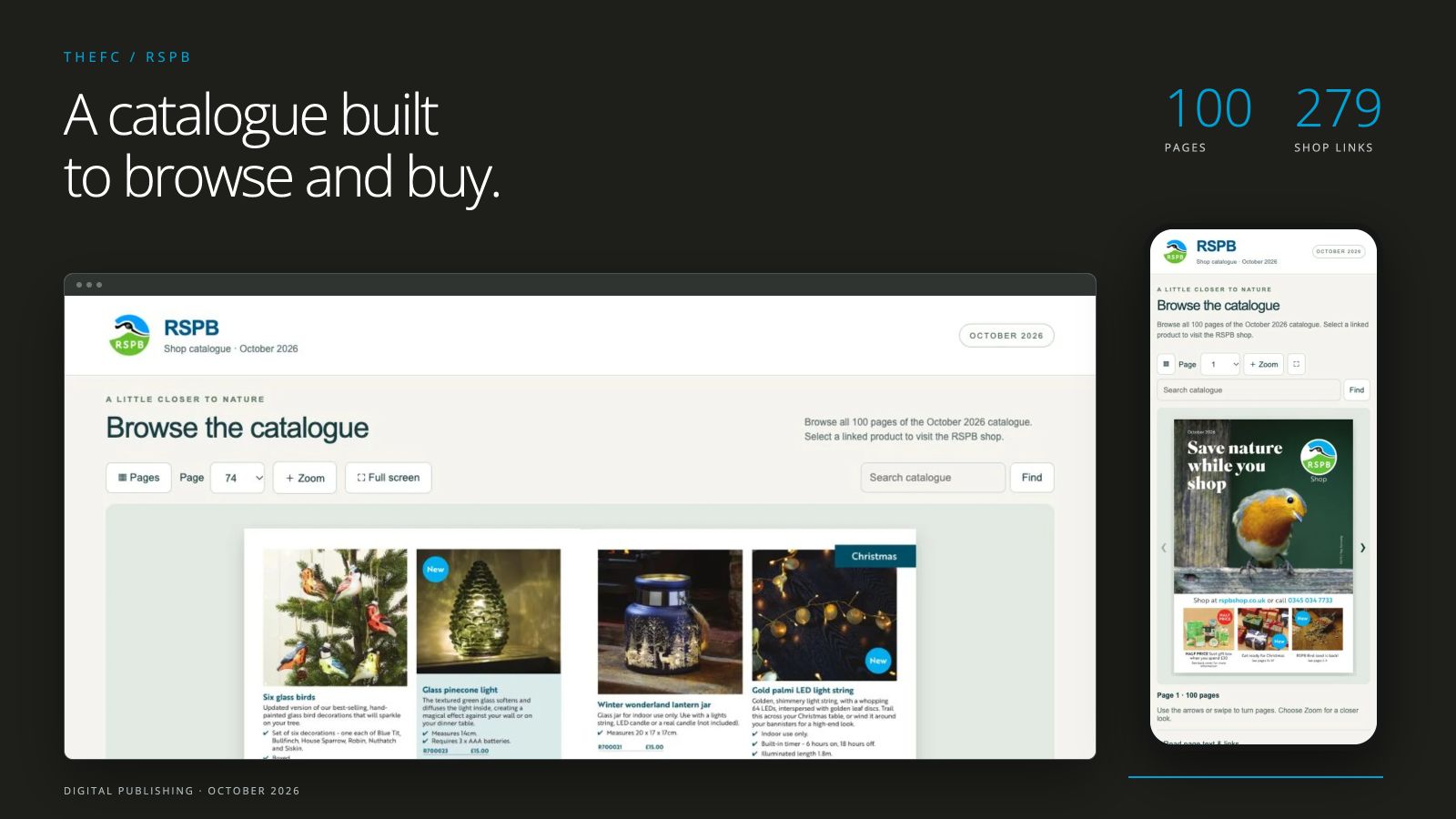
The RSPB’s printed catalogue gives customers a familiar way to explore its shop range. Our brief was to bring that experience online, preserving the supplied artwork and the links that take readers through to the RSPB shop.
Start with the reader
A catalogue needs to be straightforward to browse. Readers should be able to turn a page, take a closer look at a product and find their way to the shop without having to learn a new interface.
We built a viewer with double-page spreads on desktop and single pages on mobile. Page arrows, thumbnails and direct page selection provide several ways to move through the catalogue. High-resolution zoom lets readers inspect descriptions, prices and photography.
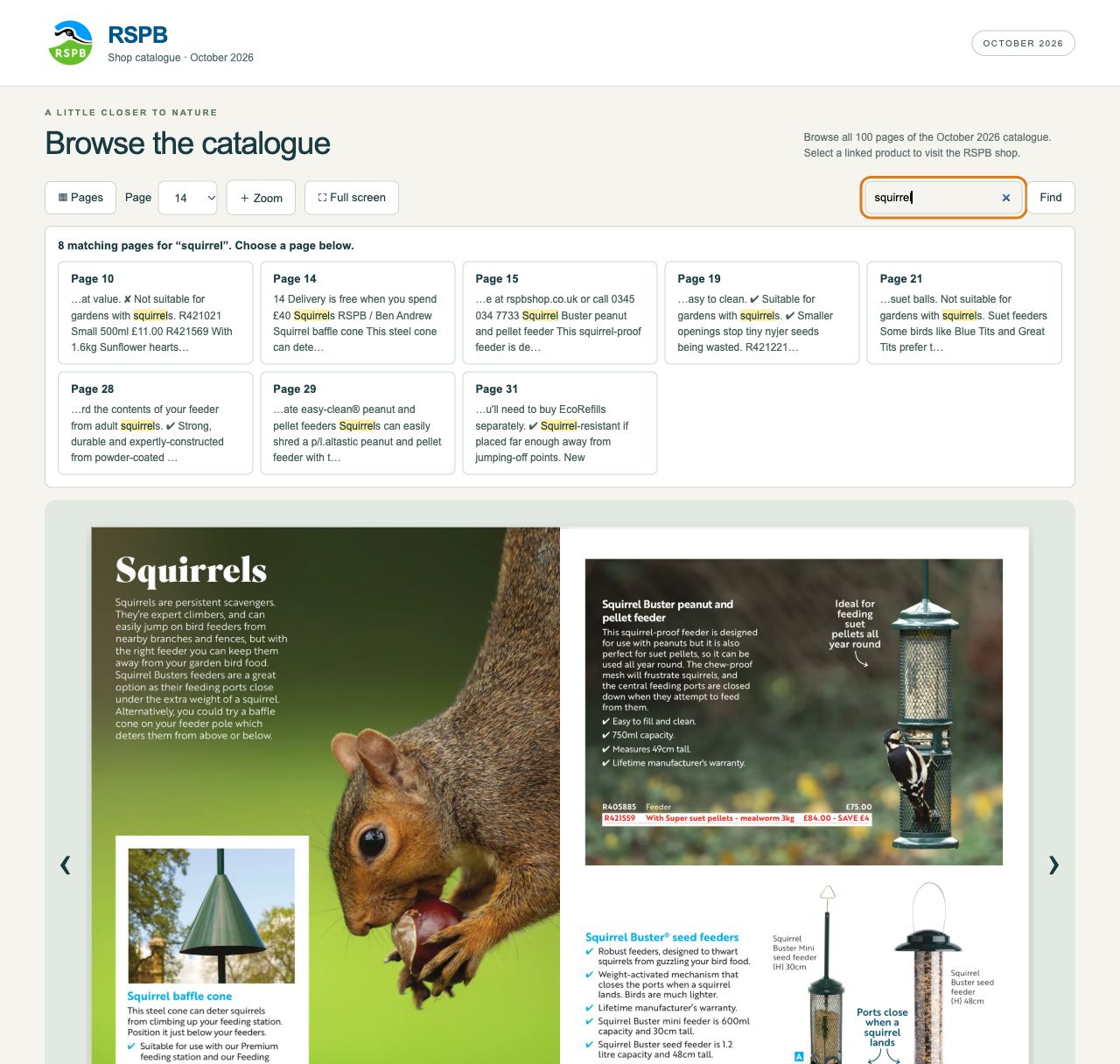
Search works as readers type, showing the pages that match alongside a short text excerpt. Selecting a result opens the relevant page.
Prove it with real pages
We began with the first 19 pages, including the cover. This working prototype gave RSPB a chance to review the presentation, navigation and shopping journey before we prepared the full edition.
Feedback during that stage helped us make the search results clearer. Once RSPB was happy with the demo, we converted the complete 100-page PDF and checked the page order, artwork, navigation and links.
Keep the route to the shop intact
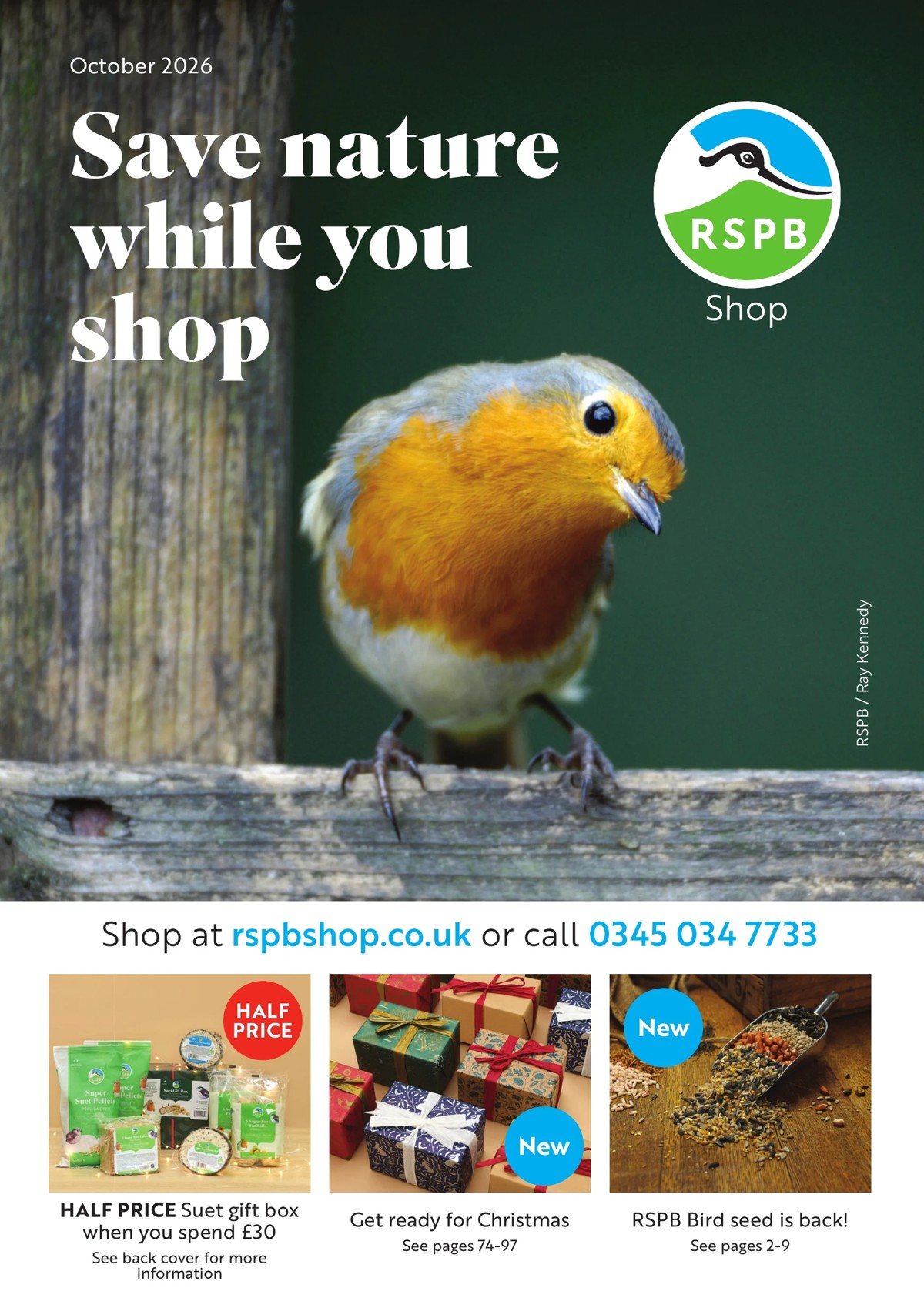
The supplied PDF contained 279 embedded shop-link regions. We preserved those links and their positions, so readers can select linked products and offers in the artwork and continue to the RSPB online shop.
The catalogue remains a browsing experience. Product information, purchasing and checkout sit with the RSPB shop. The original PDF is also available for readers who prefer to download it.
Make future editions easier
The finished viewer runs on existing hosting without an ongoing flipbook software licence. A reusable conversion process takes the supplied PDF and prepares the page artwork, text and embedded links for the website.
Future editions still need checking before publication, but the publishing process is now in place. RSPB’s Google Tag Manager container has also been added to support its existing analytics arrangements.
Technology with a practical purpose
AI-assisted development helped us build, test and refine the viewer, drawing on our experience of publishing the catalogue online. The work combined a working prototype, client feedback, PDF inspection and checks of the finished site.
The result connects an existing publication with the online shop, while giving us more control over how it is presented, hosted and updated.
If you publish catalogues, brochures or other publications, there may be an opportunity to make that content more useful online. Start with what your readers need to do, then build the experience around it.